The Case for Unpacking: Why Kumamoto Earns Two Nights, Not a Day Pass
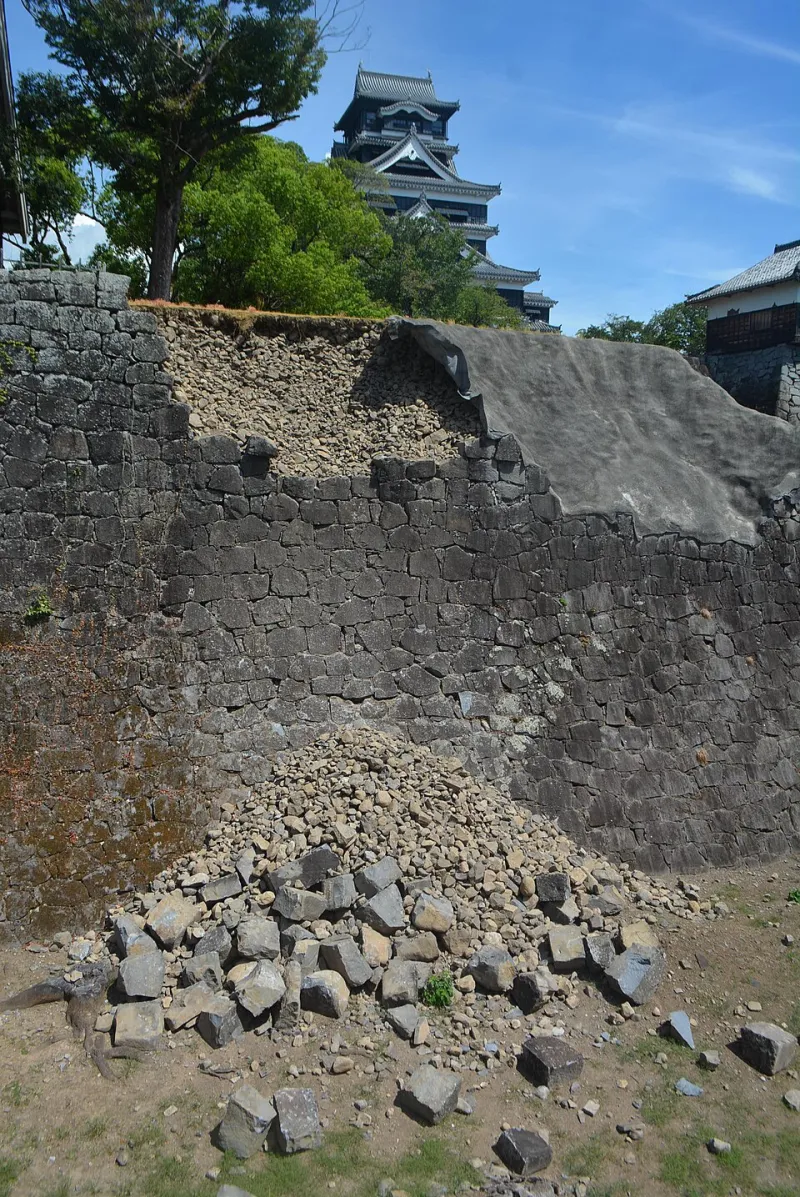
Photo: Katorisi, CC BY-SA 4.0, via Wikimedia Commons
There's a moment on the shinkansen south from Hakata when the rice fields flatten out and the first gray ridges show up on the left. Thirty-five to fifty minutes later you're in Kumamoto, and half the car is already doing math in their heads: how much can I see before the last train back to Fukuoka?
That calculus is the problem. Not the train, not the castle, not the ramen. The math.
The day-trip arithmetic doesn't add up
A Fukuoka-to-Kumamoto day trip sounds brilliant because the ride is short. But stack the pieces: hotel checkout, a locker at the station, the tram into town, a timed castle ticket, a lunch queue, one museum, the walk back, the tram again, the shinkansen. Your "day in Kumamoto" becomes five usable hours and a lot of standing around watching the clock instead of the stone walls.
Two nights flips the ratio. You get a slow morning, an unhurried evening, and one afternoon that belongs to whatever you feel like doing. Kumamoto is not a checklist city. It rewards travelers who leave a gap in the schedule.
Dawn belongs to the castle walls
Kumamoto Castle opens at a civilized hour, but the outer paths don't require a ticket. Walk the perimeter before breakfast, along the moat where the stones sweep upward in that fan-shaped curve called mushagaeshi — a slope designed to shrug off attackers and now mostly shrugging off pigeons. Morning fog pools in the ditch. Old men with small dogs nod at you. A heron ruins the symmetry of your photo and somehow improves it.
The castle itself, begun in 1601 under Kato Kiyomasa, is still stitching itself back together after the 2016 earthquakes. Restoration has moved in stages, with turrets and wall sections reopening as work finishes and the main keep receiving visitors again. Check current closures before you go — part of the experience is understanding that this is neither a ruin nor a replica, but a working restoration.
The tram is not transportation, it's the itinerary
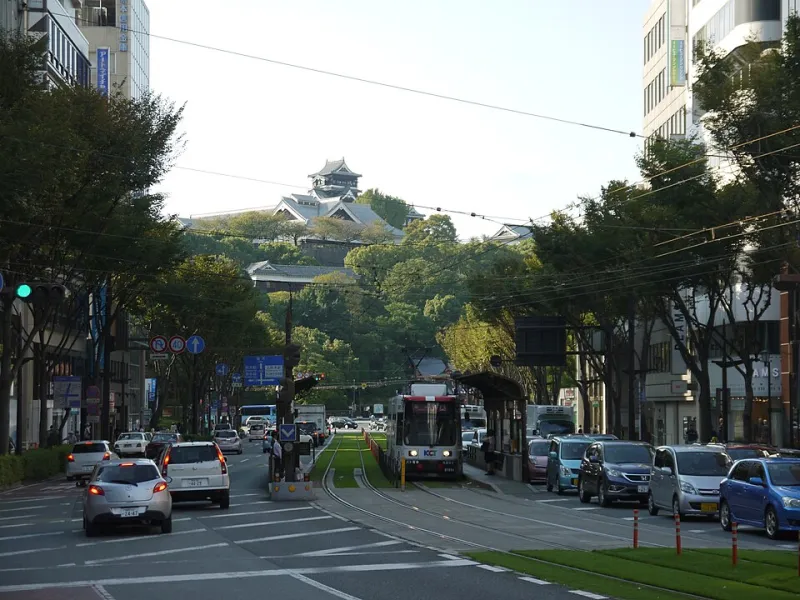
Kumamoto's two tram lines share a spine through downtown and split at Suidocho, and the flat adult fare is around ¥200 whether you ride one stop or eleven. Board at the back, pay at the front, drop coins in the box or tap an IC card.
Ride it for the pleasure of it. One line rattles past the castle's outer moat; the other wanders toward the station side of town. Hop off near Torichosuji for the covered arcades, or at Suizenji for the garden. The tram is slow on purpose, and it makes the city feel small in exactly the way you want a city to feel small.
Suizenji, and the side trip that actually fits
Suizenji Jojuen is a 17th-century strolling garden with a spring-fed pond and a miniature Mount Fuji built from turf. The conceit is that it condenses the old Tokaido highway into a fifteen-minute walk. Go early or go late, and sit down. Bring nothing to do.
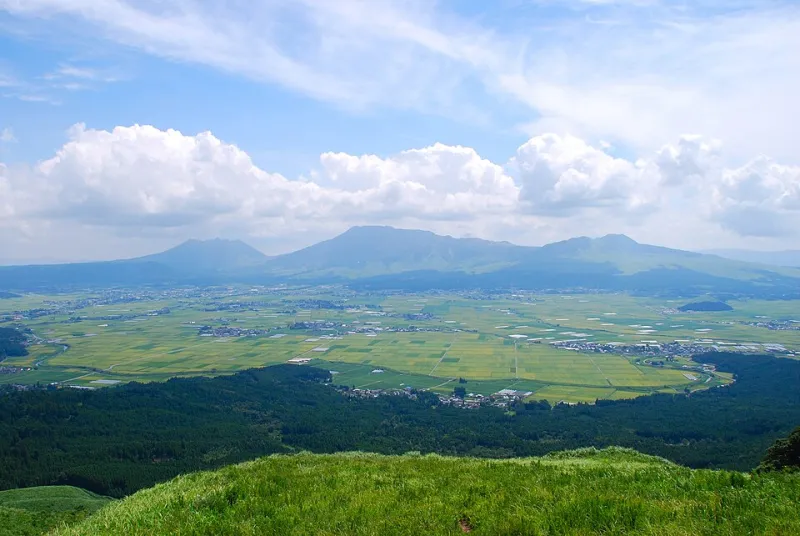
That's your easy afternoon. If you want something bigger, Aso is a train ride east — caldera views, volcanic steam, and mountain access that shifts with the volcano's mood, so check conditions the morning of. Amakusa is gorgeous and too far for a half day. Pick one thing, not three. This is the whole argument in miniature.
Evening: one bowl, done properly
Kumamoto ramen is tonkotsu with a difference: thin straight noodles, a pork-bone broth creamy without being heavy, and a slick of ma-yu, the black garlic oil that gives the bowl its smoky edge. Order kaedama — a noodle refill — when you finish the first round, because everyone does.
Find a counter with ten seats and a cook who has been standing there since 4 p.m. Don't overthink the choice. Then walk the Shimotori and Kamitori arcades while dinner settles, past the department store and the shops selling karashi renkon to people heading home.
Where to sleep, and what it buys you
Business hotels near Kumamoto Station and in the arcade district run cheaper than comparable rooms in Fukuoka, and you skip the return trip entirely. Base downtown if you want trams and food on foot. Base at the station if the next morning's plan is a train out to Aso.
The honest counterargument
Fukuoka has better nightlife. More restaurants, more bars, more of everything, because it's a bigger city. If your whole trip is four days and you want maximum noise, fine — day trip it. But if you're moving between Fukuoka and Kagoshima anyway, the night you don't spend in Kumamoto is the night you spend packing.
A two-night shape that works
- Night one: arrive early afternoon, Suizenji or the Lafcadio Hearn museum, one aimless tram ride, ramen for dinner.
- Full day: dawn at the castle walls, the keep when it opens, lunch in the arcade, one side trip, another bowl.
- Morning three: coffee, a last walk, the shinkansen south or north with the feeling that you actually went somewhere.
Two nights. One bag unpacked. No clock-watching. Kumamoto isn't a stopover — it's the part of the trip you end up describing to people back home.