Clang, Clang, Castle: Seeing Kumamoto One Tram Stop at a Time
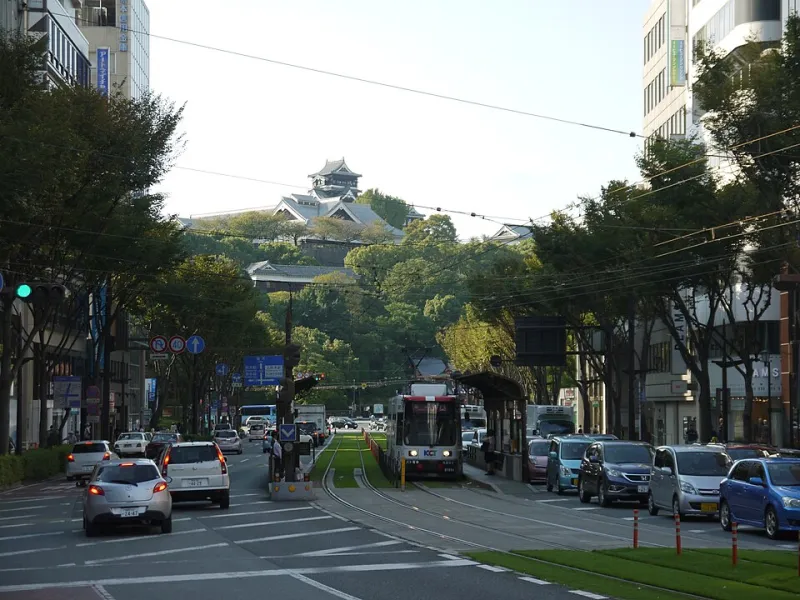
Photo: STRONGlk7, CC BY-SA 3.0, via Wikimedia Commons
Kumamoto's tram is not a theme-park ride. It is how people get to work, school, and the grocery store. That is exactly why it belongs on your itinerary. For 180 yen—roughly the price of a basic coffee back home—you get a moving window seat on a city that still lives at street level.
Why the tram beats a taxi
If you are used to opening a rideshare app the moment your feet get tired, Kumamoto will ask you to adjust. The tram will not drop you at every doorstep, and it will not be fast. What it will do is thread the center of the city in a way that makes the place legible. You see the arcade entrances, the schoolkids in matching hats, the tiny parking lots, the stone walls appearing between buildings. A taxi gets you there. The tram shows you where you are going.
The fare is the easy part
Kumamoto's system is compact and flat-fare, which removes most of the anxiety. Have coins ready, or use an IC card where the car is equipped for one. You generally pay when you exit at the front, but follow the stickers on the door and the person ahead of you—local practice is the best manual. If you plan more than a few rides in a day, ask about a one-day pass; it usually pays for itself quickly. Exact change helps, but the fare box is not a math exam. Worse comes to worst, the driver will help.
Stops worth building a day around
Kumamoto Station
Start here if you are arriving by train. Buy a coffee, watch the city reassemble itself outside the glass, then walk to the tram platform. This is also a good place to study the route map before you board. The network is small enough that you can understand it in about ninety seconds.
Kumamotojo-mae
Get off here for the castle park and those famous stone walls. Early morning is best: softer light, fewer tour groups, and a chance to hear the gravel under your shoes. The tram stop itself is not scenic, but the walk toward the castle quickly becomes a lesson in scale. Kumamoto's castle is a landmark, yes, but the approach is the real pleasure—green slopes, old masonry, and the sense that the city has arranged itself around this one stubborn silhouette.
Torichosuji
This is your stop for the shotengai—the covered shopping streets of Shimotori and Kamitori. These are not just souvenir corridors. You will find old-school stationery shops, bakeries, pharmacies, and the kind of small businesses that make a Japanese city center feel lived-in rather than staged. Walk slowly. Look up at the arcade roofs. Resist buying a second umbrella you do not need.
Suidocho
For kissaten coffee, get off around here and wander the side streets. Kissaten are the anti-chain coffee shops of Japan: dark wood, thick cups, quiet conversations, and a willingness to let you sit for a while. Look for narrow stairwells leading up to second-floor rooms. If the menu is handwritten and the soundtrack is jazz or nothing at all, you are in the right place.
Kengunmachi
Ride toward the end of the line for a more residential mood. Around the arcade edges and smaller streets, late-afternoon snack stalls and tiny shops start to appear. This is not a major sightseeing zone. That is the point. Grab something salty, watch the neighborhood do its evening thing, and then ride back toward the center as the light goes orange.
Tram etiquette without the lecture
- Queue at the stop and stand behind the yellow line. The tram will arrive quietly enough to surprise you.
- In Kumamoto, you generally board at the rear and exit at the front, paying as you leave. Check the stickers on the car, because systems can vary.
- Keep phone calls short or skip them. A tram is a shared room on wheels.
- Give up priority seats without being asked. This is standard, and people notice.
- In rush hour, swing your backpack around to your front. It is a small move that prevents a lot of accidental collisions.
A small strategy
Ride early, walk during the middle of the day, and take the tram again in the late afternoon when the windows turn into a moving picture of shop signs and dinner prep. Do not treat it as a hop-on, hop-off tour bus. Treat it as a useful public service that happens to be beautiful in ordinary ways.
The time-machine part
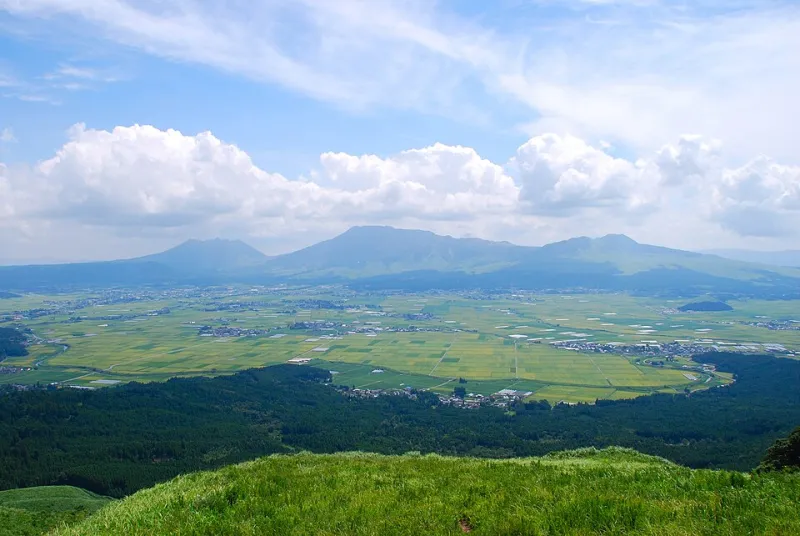
The tram is not nostalgic in a wax-museum way. It is a working vehicle with a working schedule. But it does slow you down enough to notice Kumamoto's two silhouettes—the castle on one side, the mountains on the other—and the small rituals in between. That is the ride. Clang, clang, castle, coffee, home.