Ink-Dark Iron, Threads of Gold: A Higo Zogan Field Guide
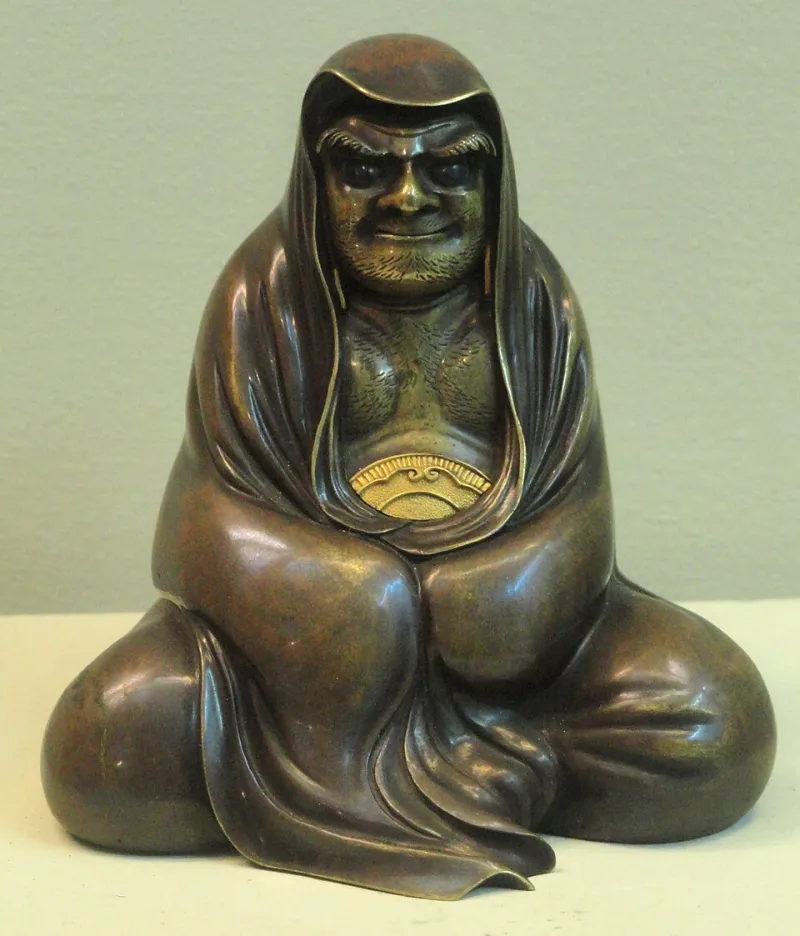
Photo: Daderot, CC0, via Wikimedia Commons
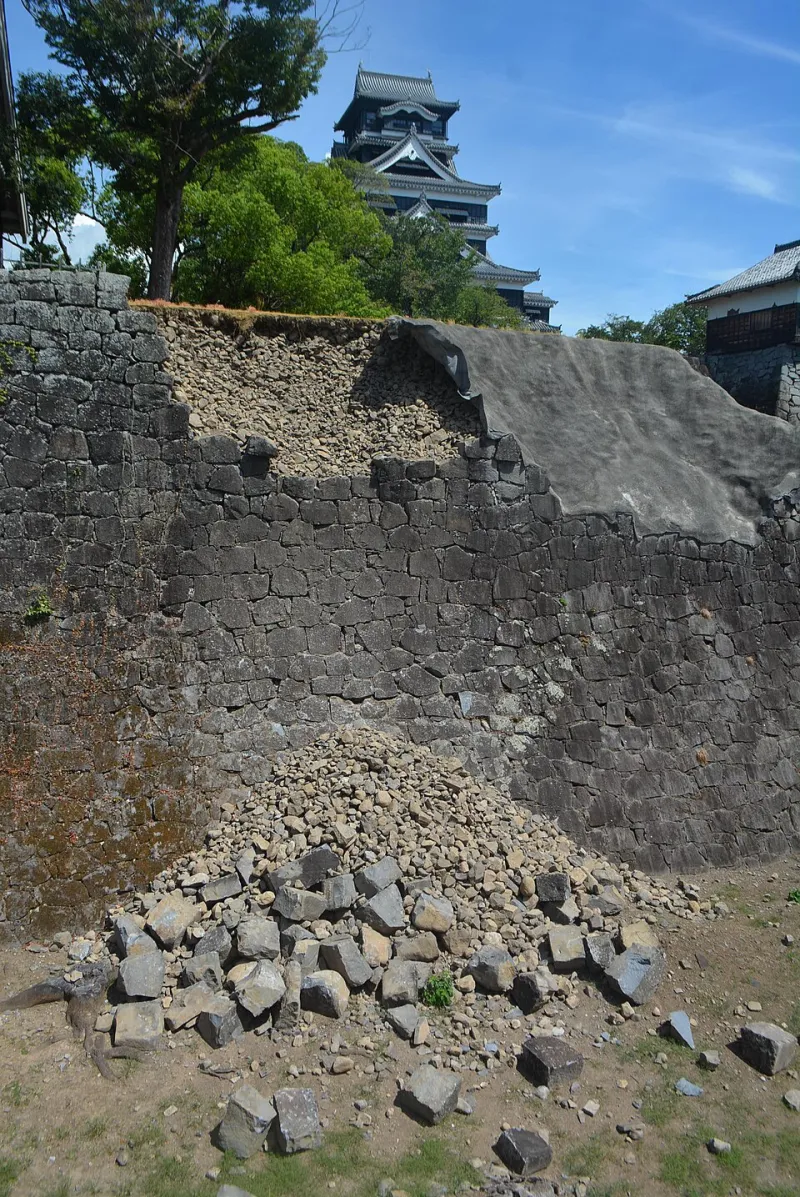
Kumamoto Castle gets the postcards. The stone walls, the rebuilt towers, the long lines at the gate — that's what most visitors come for. But walk twenty minutes west of the castle, into a narrow street of low storefronts, and you can find a craft that once lived on the hips of the very samurai who guarded those walls. It fits in your palm. It weighs less than a deck of cards.
It's called Higo zogan, and it's one of the quiet reasons Kumamoto doesn't feel like anywhere else in Japan.
What Higo Zogan Actually Is
Zogan means inlay. "Higo" is the old name for this province — the same Higo that shows up in the name of the local ramen, the local beef, the local everything. Put them together and you get a metalworking tradition that took a soft, dark base of iron and pressed gold or silver into it, so that a dull gray surface suddenly carries a bright vine, a crane, a swirl of water.
Here's the part that makes it feel less like jewelry and more like sculpture: nothing is glued, plated, or painted on. The artisan cuts a channel into the iron with a chisel, taps a wire or sliver of gold into the groove, then hammers the surrounding iron back down over the edges until the two metals grip each other. Then comes the finish — a chemical treatment that darkens the iron nearly black and, ideally, stays dark for generations.
The technique arrived through the swordsmiths. Fittings on a katana — the small ornaments on the hilt, the guard between blade and hand, the little utility knife carried alongside — were where a samurai spent his decorative budget. When the sword-carrying class was abolished in the late 1800s, the smiths who made those fittings didn't vanish. They retooled. Tsuba became tie bars. Sword ornaments became pendants, brooches, hairpins, and the flat sash clips worn with kimono. That pivot is why you can still buy the craft today in something that slips into a coat pocket.
Reading the Motifs
Look at a case of Higo zogan long enough and you'll start noticing repeats. The vocabulary is old and pretty consistent, and knowing four or five of the patterns turns a display of shiny objects into something closer to reading.
Karakusa — the arabesque vine. A curling, endless stem that trades off between gold and iron. It came in along the Silk Road, and in Kumamoto it's about as close to a signature as the craft has: patient, repetitive, and a little hypnotic to look at.
Chrysanthemum and cherry blossom. The chrysanthemum rode along with imperial symbolism; the cherry blossom is more plainly seasonal and more plainly Japanese. Both show up as tiny stamped flowers scattered across a dark field, like stars somebody planted in rows.
Dragonflies. On samurai gear the dragonfly was a favorite because it flies forward and never retreats. You'll see them on older fittings as a kind of good-luck insignia, wings reduced to a few confident lines.
Family crests. Some pieces carry a kamon — the small circular badge of a samurai household. If you're shopping, these are worth asking about, since a piece bearing a specific crest is often a reproduction of a known original rather than a generic design.
Water and clouds. Flow lines, wave curls, and stylized mist. These tend to fill negative space, which is the opposite of how Western engraving often works — here the empty iron is doing as much of the job as the gold.
At the Bench
The first time I watched an inlay being made, I assumed the gold went in last. Wrong. The gold goes in early, and then the iron gets brutalized around it — dozens, sometimes hundreds of tiny hammer taps — until the bright metal sits flush with the dark surface and looks like it grew there.
What surprised me most was the sound. It's not a ringing blacksmith clang. It's a small, dry tick, over and over, like a woodpecker working a telephone pole from very far away. Artisans in Kumamoto who practice this are often third generation or deeper, working at a bench that has probably been reconfigured a dozen times for a dozen different products. Many will talk to you while they work if the shop is quiet, and most are patient with the obvious tourist question — how long does one piece take? The honest answer tends to be a version of "it depends," followed by a specific number that sounds either surprisingly fast or surprisingly slow depending on what you're holding.
Some workshops will let you try a few taps yourself on a scrap plate. Take the offer. It is much harder than it looks, and you will gain a sudden and permanent respect for the people doing it in a shop window.
A Small Circuit
You don't need a car for this one. Build a half-day around the center of town and keep your expectations reasonable — these are small shops, not museums with turnstiles.
Start at the Kumamoto Prefectural Traditional Crafts Center, a short ride from the castle area. It's the easiest low-pressure introduction: displays of Higo zogan alongside other local crafts, often live demonstrations, and staff who are used to explaining the technique in plain language. It's also the single best place to see several generations of work side by side before you spend money.
Next, head for the Shimada Museum of Art, a small, deeply local collection with samurai arms and armor and a serious holding of metalwork. Less crowded than the castle, and the kind of place where you can put your nose close to a case for twenty minutes without anybody hurrying you along.
Then spend the rest of your time on foot in the shopping streets and the blocks around the castle's edge, where the zogan workshops cluster. Independent ateliers here are typically open standard business hours but may close unpredictably; a quick look at the door and a polite poke of the head is normal and welcome. If a shop looks closed, it may just be lunch.
Buying Something That Flies Home
This is where Higo zogan earns its reputation as the friendliest of souvenir crafts. A pendant, a pair of earrings, a tie bar, a small brooch, a keychain — most pieces are the size of a coin and weigh almost nothing. Nothing sharp, nothing fragile, nothing that needs to be declared as a weapon. It goes in your carry-on and it arrives intact.
Prices run a wide range, from modest machine-assisted pieces sold in gift shops up to fully hand-inlaid works that cost as much as a nice watch. Ask directly which is which. Good shops will tell you without flinching, and many will show you the difference under a loupe — the hand-cut channel looks slightly more organic, the inlay a bit deeper in the iron.
Two practical notes. First, bring cash; smaller workshops may not take cards, and international cards can be fussy. Second, remember that the dark finish is a surface treatment, not a coating — don't scrub it, don't soak it, and don't leave it on a windowsill in the sun for a month. Wear it. That's what it's for.
Why It Sticks With You
Kumamoto gives travelers a lot of big, obvious beauty: the volcano, the caldera, the castle walls at dawn. Higo zogan is the opposite scale. It's a craft that survived because a group of metalworkers, faced with the end of their entire market, quietly decided to make smaller things for different people.
You can hold that whole story between two fingers. That's a rare souvenir.