A Wooden Pass and Three Steam Trails: The Kurokawa Onsen Overnight
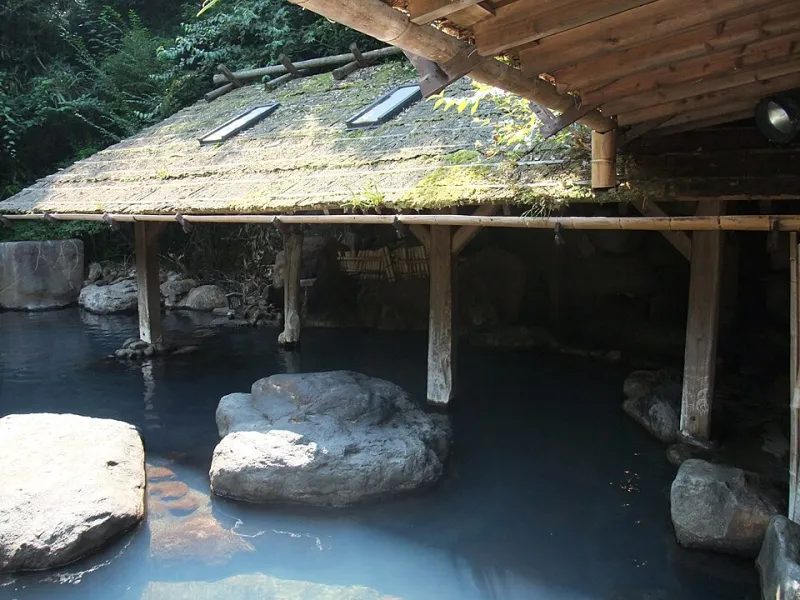
Photo: Igorberger, CC BY-SA 3.0, via Wikimedia Commons
Kurokawa Onsen does not announce itself with a neon arch or a giant parking lot. It arrives as a narrow road folding into cedar forest, a few lanterns, a bridge, and the steady smell of sulfur drifting downhill. The village sits in the hills north of Aso, in Kumamoto Prefecture, and it feels less like a resort and more like a small mountain town that happens to be built around hot water. For a US traveler used to spa hotels with wristbands and poolside menus, the system here is refreshingly analog: a wooden pass, three baths of your choosing, and a main street made for slow walking in yukata and sandals.
The Wooden Pass Is the Whole Idea
The bath passport—usually called a nyuto tegata—is a small wooden plaque sold at participating ryokan and at the village information point. It comes with three stickers or seals. You hand it over at each bath, someone removes one, and you soak. When the third one is gone, the pass is a souvenir. The fee is modest, though it changes over time, so check the current rate when you arrive. The pass typically covers daytime bathing at a set list of member inns, not every bath in town, and it usually comes with limited hours.
That last detail matters. This is not a theme-park pass you can flash at midnight. Most passport baths welcome outside bathers from mid-morning until late afternoon, and a few keep longer hours. Your own ryokan’s bath is separate—it is included with your stay, and it is often the best early-morning option. Think of the wooden pass as a ticket to sample other people’s steam, not a replacement for the one downstairs.
Pick Three Baths by Mood, Not by Checklist
Kurokawa has around two dozen inns, and trying to rank them is a fool’s errand. A better approach is to choose three different feelings.
For a riverside soak, Yamamizuki is the classic move: open-air pools close to the water, with the sound of the stream doing most of the entertainment. It is the kind of bath where you sit very still and suddenly realize forty minutes have disappeared.
For a forest bath, Hozantei leans into its woodland setting, with steam rising into trees and a sense of being slightly removed from the village bustle. It is a good second stop if you want quiet after the main street.
For convenience, Fumoto Ryokan sits right in the center, which makes it easy to fold into a walk. It is less about a dramatic view and more about the pleasure of stepping off the street and into hot water within a minute.
If you only have time for three, resist the urge to sprint. The joy of the pass is the rhythm: soak, cool down, walk a little, soak again. Rushing between baths turns a pleasure into a logistics exercise.
Getting There Without a Car
Kurokawa Onsen is doable by public transport, but it rewards a little planning. From Kumamoto Station, take the JR Hohi Line to Aso Station, which takes roughly an hour and twenty minutes depending on the train. From Aso, the Kyushu Odan Bus runs to Kurokawa Onsen in about fifty minutes. The buses are not frequent, so check the schedule before you commit, and reserve if the operator allows it. In busy seasons, the afternoon runs can fill.
Once you are in the village, you do not need a car. The main street is walkable, the ryokan are clustered, and the passport baths are close enough to reach on foot. Bring a small day bag, wear shoes you can slip off easily, and keep your luggage at your inn. The village is hilly in places, and the lanes get dark after dinner, so a phone light helps.
The Etiquette That Makes a First Onsen Easy
Onsen etiquette is not mysterious, but it is specific. You wash thoroughly at the shower stations before entering any tub. No soap in the bath. Keep your hair out of the water if you can. Voices stay low. Swimsuits stay off.
Towels are the detail people forget. Bring the small towel from your ryokan, or buy one at the bath. The big bath towel stays at your inn. A small towel is for drying your face and for modesty as you walk between changing room and tub; it should not go into the water. A plastic bag for the damp towel is a small kindness to your day pack.
Tattoos are the trickier subject. Many Japanese ryokan and public baths still ask guests to cover or avoid shared baths if tattoos are visible, and policies vary from place to place. Kurokawa is not a monolith. If you have tattoos, email your ryokan before booking and ask directly about private family baths or in-room onsen. Some inns offer a private bath option that solves the issue neatly; others may ask you to cover up. Knowing before you arrive is far better than discovering it at the changing-room door.
Timing is the other thing. The fantasy of three soaks before breakfast is charming, but most passport baths open mid-morning. A realistic version looks like this: one early soak at your own ryokan, breakfast, checkout, then two passport baths before lunch. If your inn has a 6 a.m. bath, take advantage. Otherwise, save the three-bath challenge for a day when you are staying two nights.
The Village After Dark
Kurokawa’s main street is at its best after the day-trippers leave. The lanterns come on, the yukata come out, and the smell of steam mixes with woodsmoke. You walk slowly because the street is narrow and the shoes are not made for speed. You stop for a soft-serve or a local sake. You maybe buy a steamed bun you do not need. The point is not to conquer the village. The point is to let the hot water and the mountain air set the pace.
That is the Kurokawa weekend in one sentence: one wooden pass, three baths, and enough time to walk back to your room still warm. It is not a checklist. It is a small, steamy loop through the hills, and it fits neatly into a Kumamoto trip that already has volcano roads and castle stone in it.