Rice Water on the Chainring: A Half-Day Loop Through Kikuchi's Terraced Valley
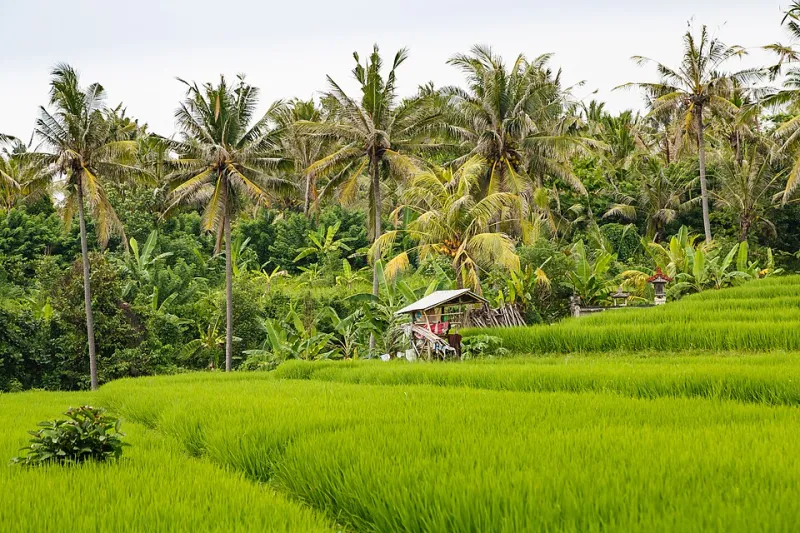
Photo: CEphoto, Uwe Aranas, CC BY-SA 3.0, via Wikimedia Commons
There is a moment on the road out of Kikuchi where the last convenience store falls away and the valley opens up, and every square foot of it is holding water. Rice paddies, stacked in shallow steps, each one acting as a mirror for whatever the sky happens to be doing. In late spring they're glass. By summer the green is almost aggressive. In autumn the whole thing goes gold and gets cut down to stubble in about a week.
You don't need a car to see this. You need about four hours, a bicycle with working brakes, and the willingness to accept that Kikuchi is not Aso and was never trying to be. That's the whole pitch. No ropeway, no crater rim, no timed bus. Just a valley, a gorge, a bowl of noodles, and a hot spring at the end of it.
Why Kikuchi Rewards the Slow Gear
Aso gets the crowds because Aso has a volcano, and volcanoes are undeniable. Kikuchi has water. It has the kind of landscape that doesn't photograph as dramatically but feels better to be inside — cool air off the gorge, irrigation channels running along the road like the valley's own plumbing, farmhouses with their sliding doors open and someone's laundry going up.
On a bike you get all of it at the right speed. Fast enough to cover ground, slow enough that a heron lifting off a paddy still startles you. This is the anti-checklist day trip. If you come here trying to "do" Kikuchi, you'll finish in an hour and be bored. If you come here to ride, eat, and sit still, the valley will hand you the whole afternoon.
Getting There Without a Car
Kikuchi sits on the JR Hohi Line, which means you can leave Kumamoto Station in the morning and be standing in a rice valley before lunch. Depending on the departure, it's roughly an hour, and some connections require a change, so check the schedule the night before rather than assuming an hourly rhythm. Sit on the right side heading out and you'll get the river.
From Kikuchi Station, the practical move is to arrange a rental bicycle in advance. Inventory in a town this size is not infinite, and the shops that rent tend to open late and close early. Call or check ahead — a folding bike from a city rental scheme is not going to love these farm roads. You want something with gears and slightly wider tires, because a few of the connectors between paddies are packed gravel.
The Loop Itself
The valley floor is the easy part. Roads between terraces are narrow, flat, and lightly trafficked, and the local driving culture is patient — tractors, kei trucks, the occasional van moving at a speed that suggests nobody here is in a hurry to be anywhere. Ride the perimeter lanes first, then cut inward on whatever farm road looks interesting. You will get mildly lost. This is fine and arguably the point.
Aim for the terraced paddies in the middle of the day when the light hits the water at an angle and the whole hillside goes silver. There are small stone markers and a couple of wooden viewing platforms, but honestly the best views are from the saddle of the bike, leaning on a guardrail, eating something from a convenience store you bought two towns back.
The gorge is a different matter. Kikuchi Gorge sits up a climbing road, and while strong riders can absolutely get there, most people will have a better time taking a bus or a short taxi from town and walking the gorge trail on foot. It's a cool, mossy, green-lit corridor with water moving fast over basalt, and the temperature drops the moment you step in. Bring a layer even in July.
Lunch, and the Case for Eating Late
Country lunches here are not precious. Expect soba or udon, maybe a set with grilled river fish, pickles, and a bowl of rice that was in the field a mile away. Several places around the valley do a straightforward lunch set for a price that would buy you a coffee in Seattle. Hours are short and unpredictable, so eat between noon and one, or accept that your lunch might become an early dinner.
If you're riding, this is the natural halfway point. Park the bike, eat slowly, and let the heat of the day pass before climbing back on.
End With a Soak
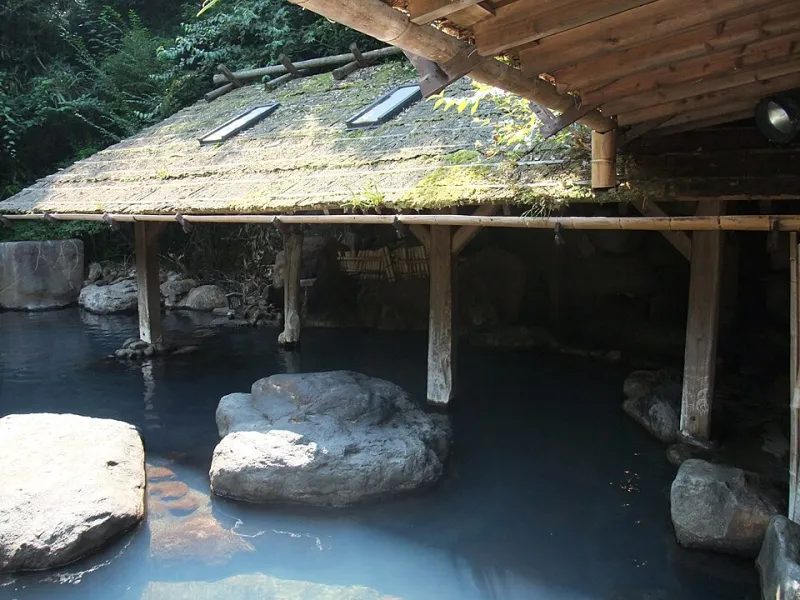
Kikuchi Onsen is a small hot spring town, and its baths are the correct finish line. Many ryokan and public baths accept day visitors for a modest fee, usually with a towel rental, though hours vary by season and by whether the place happens to be busy. Ask at the tourist information point when you pick up the bike. There's nothing clever to say about sitting in hot water after four hours of pedaling through a rice valley — it simply works.
Then ride back to the station, drop the bike, and take an evening train into Kumamoto with the window open and the sun going orange over the paddies you just crossed.
Practical Notes for US Travelers
- Timing: Aim for a weekday. Weekends bring domestic day-trippers to the gorge, and the rental bikes go fast.
- Cash: Bring yen. Small farm stands, some lunch spots, and a few bathhouses are cash-only.
- Season: May and June for water-filled terraces, September for gold. August is hot and humid — start early, carry more water than you think you need.
- What to skip: Don't try to combine Kikuchi with Aso in one day. That's how you end up seeing neither.
- Navigation: Download an offline map before you leave the station. Cell service in the valley is patchy in exactly the places where you'll want it.
The whole loop, with lunch and a soak and a lot of unnecessary stopping, is maybe fifteen miles of riding. You'll come back with muddy calves, a phone full of paddy reflections, and no receipts to show anyone. That's the deal Kikuchi offers, and it's a good one.